
How to Spend 5 Days in Bhutan: A Cultural & Himalayan Journey
Written by: Sophie Echeverry
There are places you visit.
And then there are places that rearrange something quietly inside you.
Bhutan is the latter.
Tucked between India and Tibet, this Himalayan kingdom, roughly the size of Switzerland measures success not in GDP, but in Gross National Happiness. Monasteries cling to cliffs. Prayer flags stitch color into alpine wind. And time feels… intentional. Nearly 70% of the country remains forested, and its constitution mandates environmental protection.
This is a nation where Vajrayana Buddhism shapes daily life, architecture, governance, and even national identity.
To understand how to spend 5 days in Bhutan, you must first understand this: You are entering a living spiritual ecosystem — not just a destination.
Why 5 Days in Bhutan Is Enough (When Done Intentionally)
Bhutan’s tourism model, overseen by the government to protect culture and environment — limits visitor numbers and emphasizes guided travel. This “high value, low impact” approach isn’t marketing. It’s policy.
Bhutan is also the only carbon-negative country in the world.
Five days, when intentionally structured, allows you to explore western Bhutan’s cultural core:
Paro Valley (gateway & sacred geography)
Thimphu (modern monarchy + tradition)
Punakha (former capital + spiritual architecture)
This region alone tells the story of Bhutan’s political, religious, and ecological identity.
Day 1: Arrival in Paro & Thimphu’s Living Culture
Paro Valley sits at 7,300 feet above sea level, surrounded by pine forests and terraced farmland. Historically, it was a crucial trade route between Tibet and the Indian plains.
From Paro, drive one hour to Thimphu, one of the only capital cities in the world without traffic lights.
Bhutan unified in the 17th century under Zhabdrung Ngawang Namgyal, who established the dual system of governance combining spiritual and political leadership — a structure that still influences Bhutan’s monarchy today.
In Thimphu, visit:
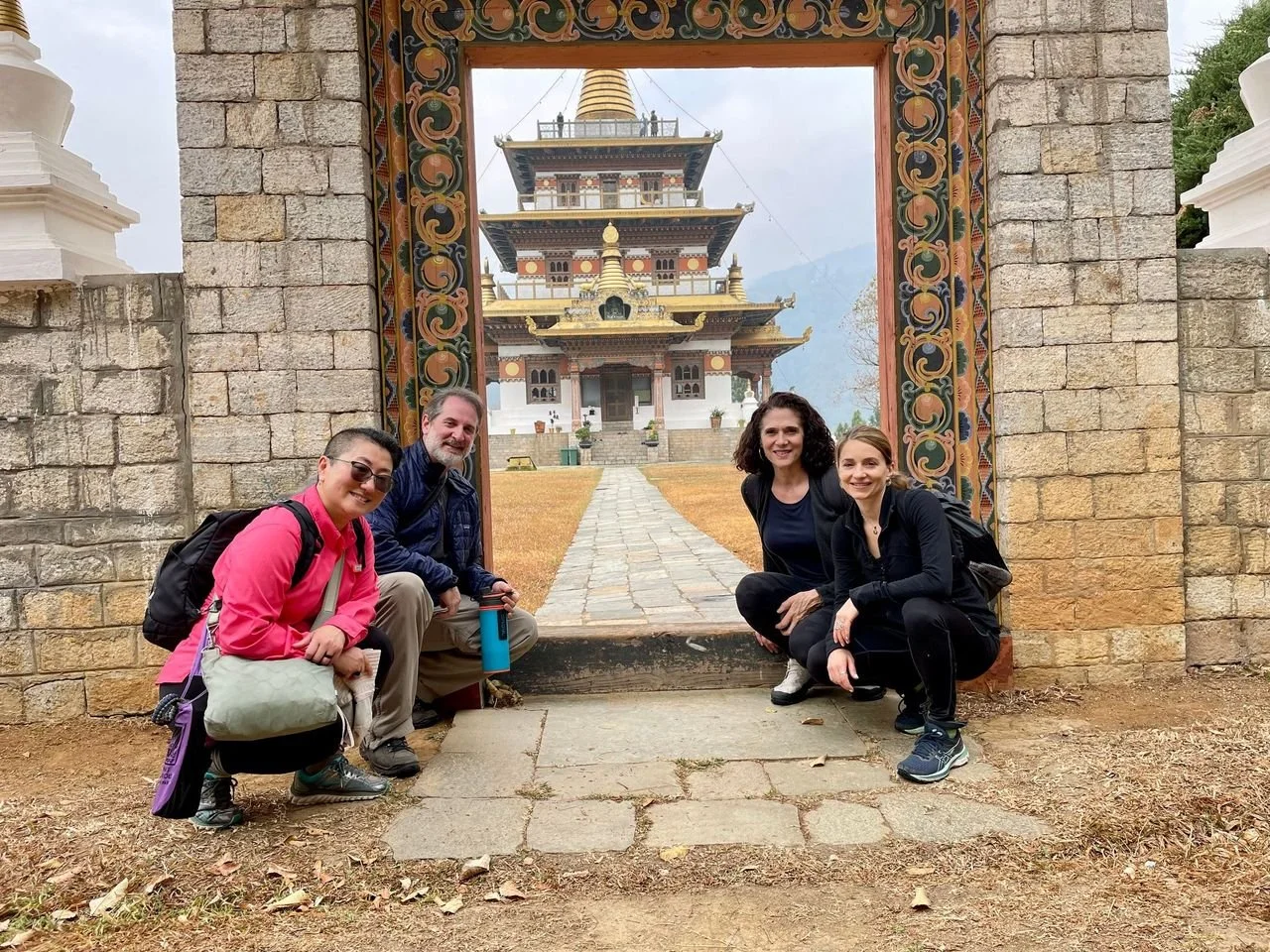
Tashichho Dzong, rebuilt in the 1960s, houses the throne room and monastic body. Dzongs are fortress-monasteries unique to Bhutanese architecture.
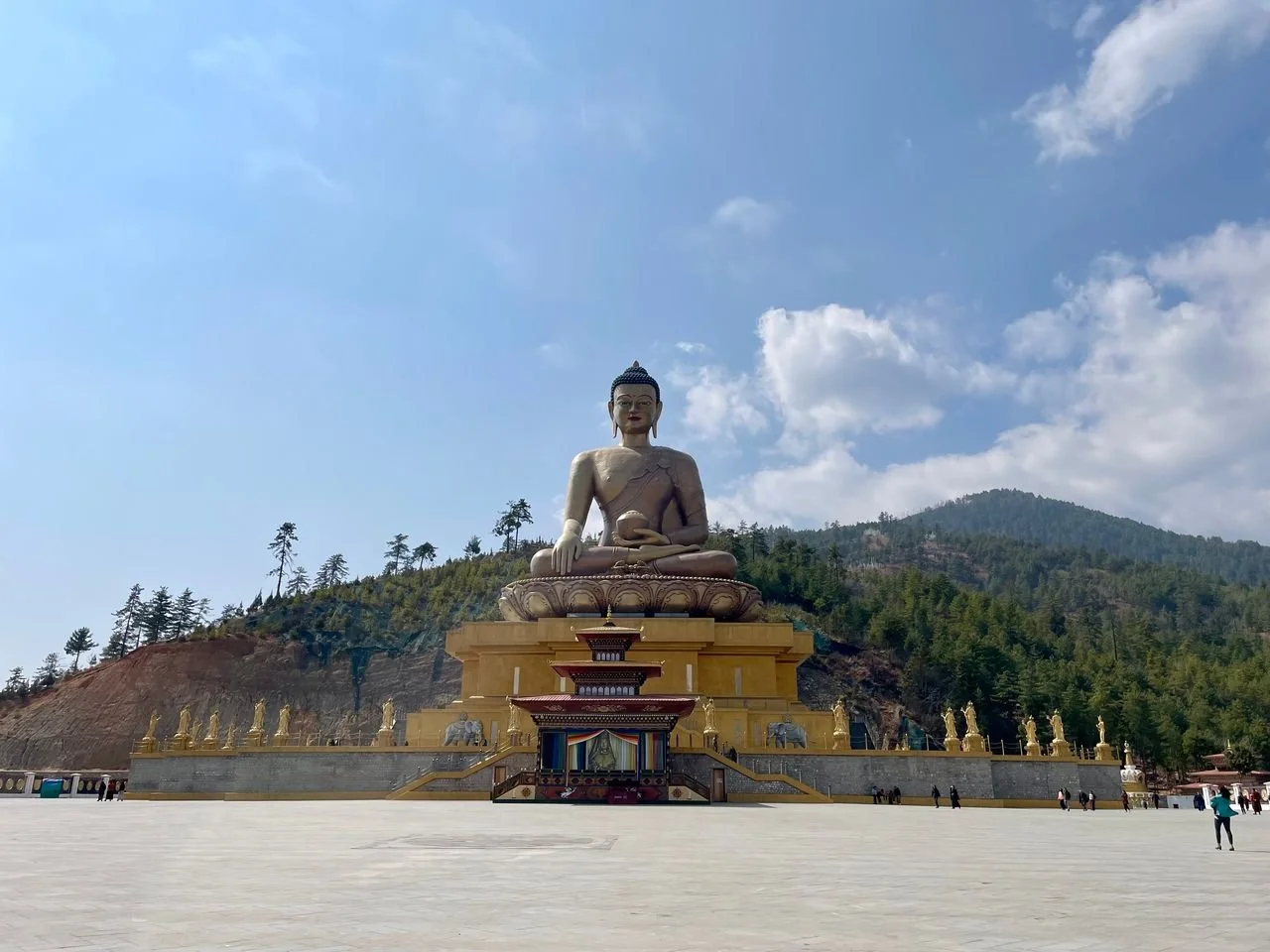
Buddha Dordenma, a 169-foot gilded statue completed in 2015, overlooking the valley as a symbol of peace and protection.
Notice the architectural consistency: No billboards, no high-rise buildings, and traditional woodwork patterns mandated by law. Bhutan modernizes slowly — deliberately.
Day 2: Crossing Dochula Pass to Punakha
The drive from Thimphu to Punakha is more than a commute; it is a gradual immersion into Bhutan’s sacred landscape. The road climbs steadily through pine and rhododendron forests before reaching the 10,200-foot Dochula Pass. Here, 108 white chortens stand in silent tribute to Bhutanese soldiers who lost their lives defending their country. On clear days, the eastern Himalayas appear as a snow-capped horizon, reminding travelers of the region’s spiritual and geographic majesty.
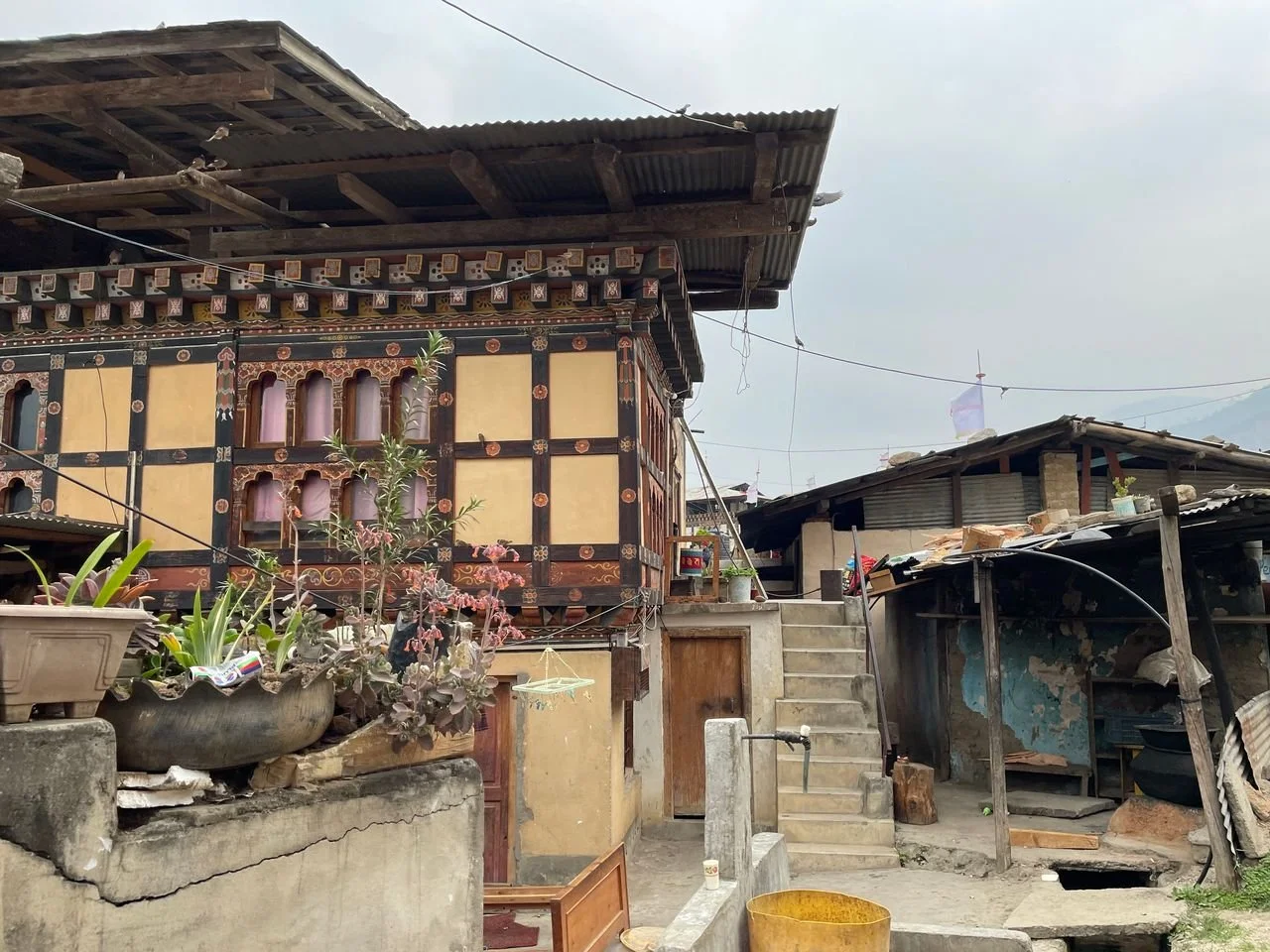
Bhutanese geography is inseparable from belief. Mountains are seen as the abodes of protective deities, and prayer flags scatter blessings into the wind. Every bend in the road feels like a threshold for reflection. Descending into Punakha brings a gentle shift: terraced rice paddies spread across fertile valleys, rivers weave through fields, and the subtropical air is fragrant with the scent of growing herbs and wildflowers.
Here, culture is inseparable from cuisine.
Lunch in Punakha often features:
Red rice, a nutty, locally grown variety that is a staple of the Bhutanese diet
Ema datshi, the national dish of chilies simmered with local yak or cow cheese, creating a creamy, spicy stew
Seasonal vegetables like spinach, turnips, fiddle head fern or radish greens, lightly sautéed or steamed, often seasoned with fermented chili paste
Buckwheat pancakes or momos filled with cheese or vegetables, offering a hearty, warming taste of local tradition
Meals are rarely rushed; each bite reflects centuries of adaptation to altitude, climate, and local agriculture. Even something as simple as a bowl of red rice tells the story of the valley: the soil, the monsoon-fed paddies, and the careful hands of farmers who have tended these fields for generations.
After lunch, some travelers enjoy a quiet walking reflection along the river, letting the flavors, sounds, and scents of Punakha settle into a contemplative rhythm. Others may try a short restorative soak in a stone bath, preparing body and mind for the next day’s hike to Tiger’s Nest. Here, flavor, landscape, and tradition converge, making the valley not just a place to see, but one to fully inhabit.
Day 3: Rural Bhutan & Sacred Stories
Punakha was Bhutan’s capital until 1955 and remains the winter residence of the monastic body. Here stands Punakha Dzong, built in 1637 at the confluence of the Pho Chhu (Male River) and Mo Chhu (Female River).
Symbolically the rivers represent masculine and feminine energies. Their meeting point represents harmony. Inside the dzong are intricate murals depicting Buddhist cosmology, protective deities, and Bhutanese legends.
Nearby, you’ll find Chimi Lhakhang, temple of Drukpa Kunley, the “Divine Madman,” a 15th-century saint who used humor, sexuality, and unconventional behavior to teach Buddhist principles.
This blend of sacred seriousness and playful spirituality is uniquely Bhutanese.
Day 4: The Paro Taktsang Hike
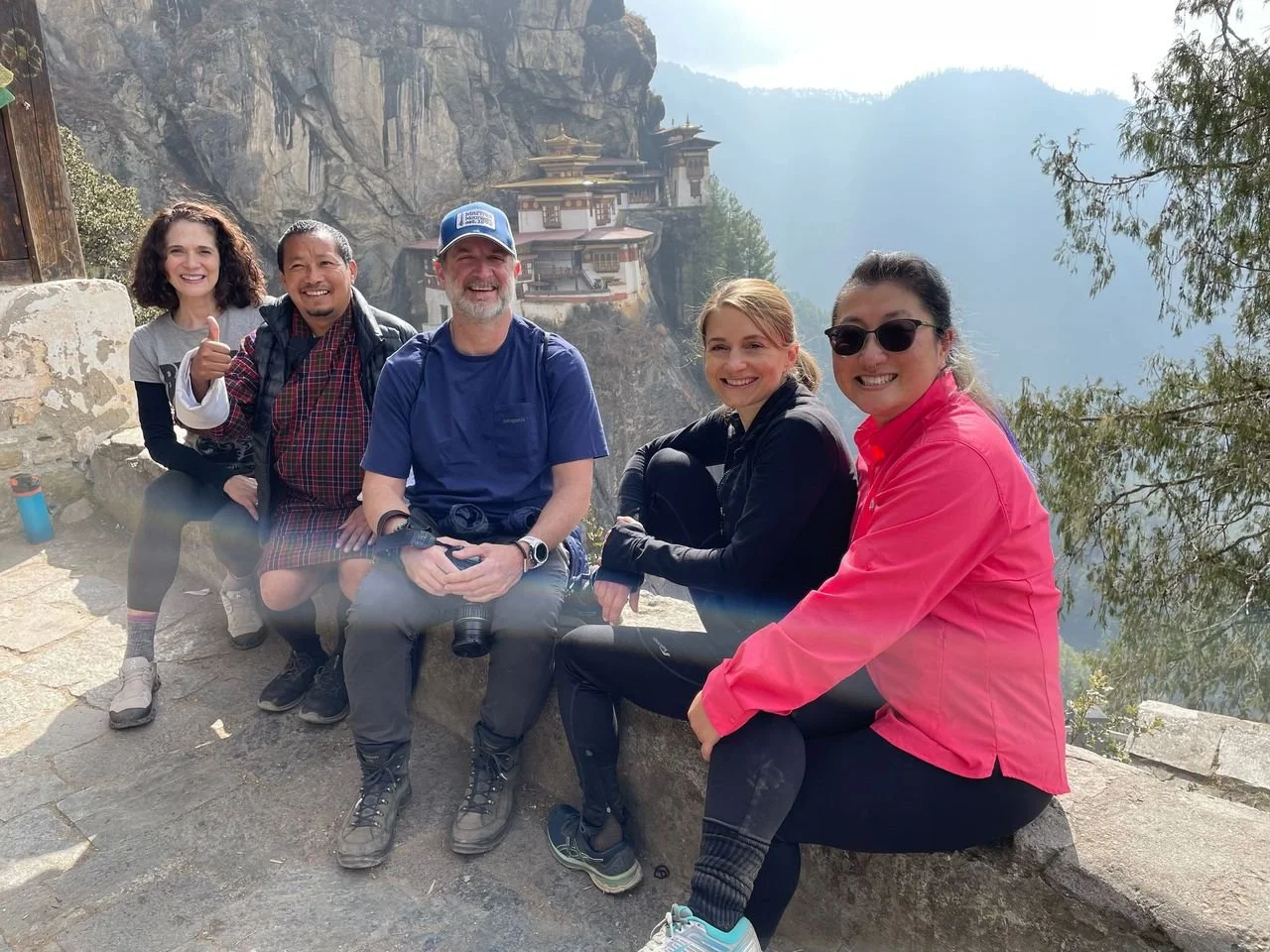
Perched 3,000 feet above the valley floor, Tiger’s Nest is Bhutan’s most iconic site. According to legend, Guru Rinpoche flew to this cliff on the back of a tigress in the 8th century to subdue local demons and meditate in a cave for three years.
Geographically, the monastery clings to granite rock faces. The climb gains significant elevation, and the thin mountain air demands steady pacing, giving travelers a literal sense of ascent as well as a metaphorical one.
Culturally, pilgrimage is still practiced: monks reside and meditate here, and visitors are welcome to enter active temples, not museums. The hike is physical, yet the impact is deeply internal — a mix of awe, quiet reflection, and accomplishment.
After descending, the journey continues in a quieter, restorative way. Travelers often enjoy a traditional Bhutanese hot stone bath, a centuries-old method of soothing tired muscles. Stones heated in a fire are placed in the bath, along with aromatic herbs, creating a warm, fragrant soak that relaxes both body and mind. It’s a private, meditative ritual that complements the spiritual ascent of the Tiger’s Nest hike, allowing the intensity of the climb to settle into stillness and reflection.
Day 5: Integration & Departure
Leaving Bhutan often feels different than leaving other countries. There are no mega-resorts, no nightlife districts, and no global chains dominating the skyline. Instead, you carry with you the sound of prayer wheels spinning, the scent of juniper incense, and the image of prayer flags stitched across ridgelines.
But what lingers most are the human connections you’ve made along the way. Perhaps it’s a quiet conversation with a monk at Punakha Dzong, sharing a smile as you learn to spin a prayer wheel correctly. Or a chat with a local farmer in the valley, explaining how they tend their rice paddies and herbs with care handed down through generations. Maybe it’s sitting in a farmhouse for a final meal, sharing laughter over ema datshi and red rice, feeling warmly welcomed into lives and rhythms that are so different — yet deeply resonant.
Bhutan’s development philosophy asks a radical question: What if progress was measured by well-being instead of wealth? After five days in this Himalayan kingdom, you may find yourself asking it too — carrying with you not just memories of monasteries and mountains, but a sense of perspective, human connection, and quiet presence that stays long after the plane lifts off.
Why This 5 Day Bhutan Itinerary Feels Different
Because it isn’t designed around volume.
It’s designed around:
Sacred geography
Historical continuity
Cultural preservation
Human connection
This is not a country trying to impress you. It’s a country inviting you to pay attention.
Experience Bhutan With Intention
If this way of traveling resonates, explore our thoughtfully designed Bhutan small-group journey, created for people who value cultural immersion, spacious pacing, and human connection.
More blogs for you





Discover how to spend 5 days in Bhutan with monasteries, mountain passes, and cultural immersion in Paro, Thimphu, and Punakha.