
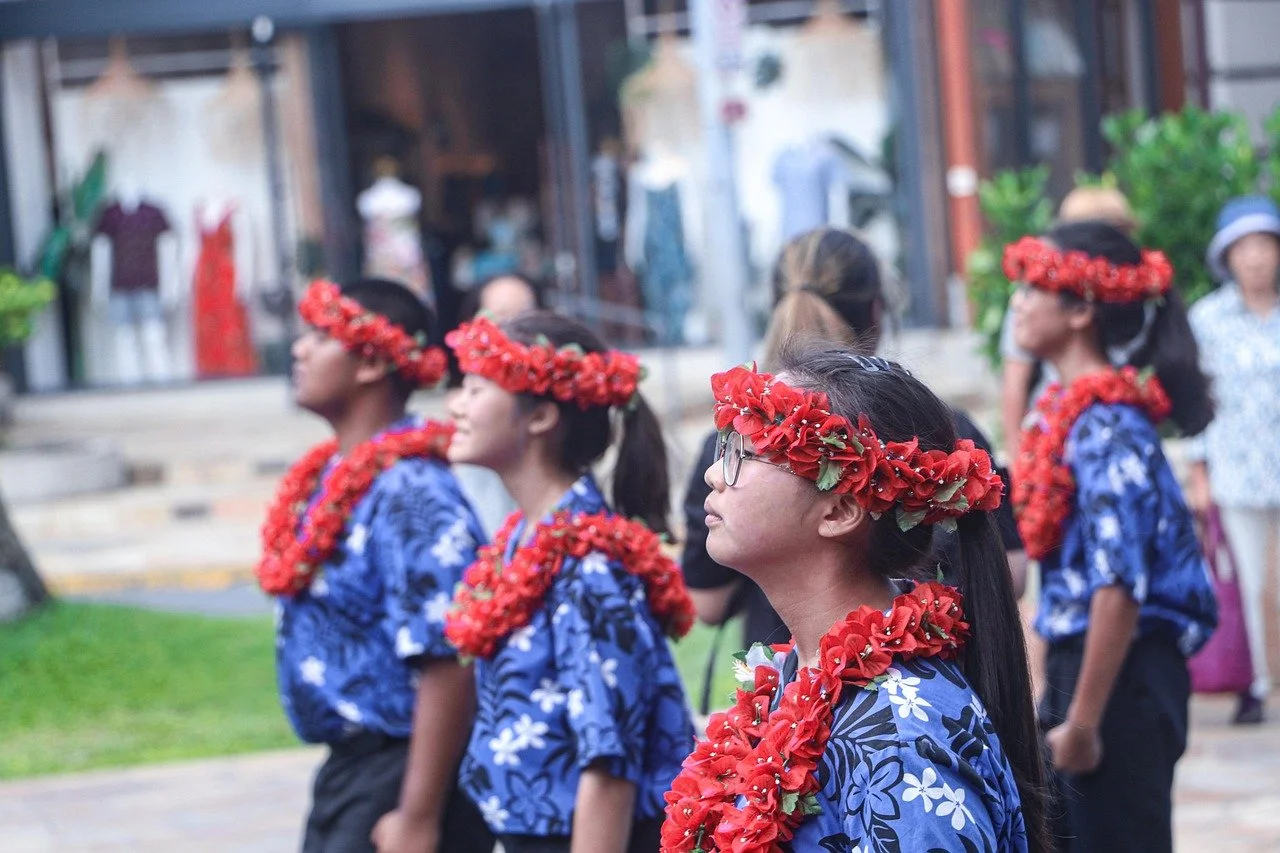
Speaking the Language of Aloha in Hawai‘i
Written by: Sophie Echeverry
Listening Before Speaking
In Hawai‘i, language is more than a way to communicate — it’s a way to connect. Each word carries the rhythm of the ocean, the wisdom of the land (ʻāina), and the values of respect and reciprocity that have guided island life for centuries.
Visitors who take the time to learn even a few Hawaiian words are doing more than expanding their vocabulary. They are showing care for culture, for history, and for the living heartbeat of these islands.
To speak Hawaiian, even a little, is to listen first. To understand that language shapes how people see the world, and how they relate to it.
A Living Language: The Story of ʻŌlelo Hawai‘i
The Hawaiian language (ʻŌlelo Hawai‘i) is one of the most distinctive and poetic languages in the world — a reflection of the islands’ natural beauty and cultural depth.
For generations, Hawaiians passed down stories, chants (oli), and songs (mele) that preserved not only history but identity. When Western colonization brought English dominance in the late 19th century, Hawaiian was banned from schools and public life. By the 1980s, it was nearly lost.
But resilience runs deep here. Thanks to community efforts, immersion schools, and dedicated speakers, Hawaiian is thriving again. Today, you’ll hear it on street signs, in schools, on local radio, and woven into everyday conversation. It’s a symbol of rebirth. A testament to pride, perseverance, and connection to heritage.

The Spirit of Aloha: More Than a Greeting
You’ve heard “aloha” countless times, but its meaning extends far beyond “hello” or “goodbye.”
Aloha is a way of being rooted in compassion, kindness, humility, and harmony with others and the world around you.
To live with aloha is to embody empathy and care. It’s a reminder to move slowly, listen deeply, and act with respect. Whether it’s a smile shared with a stranger or gratitude offered to the land, aloha is Hawai‘i’s moral compass — and learning its meaning transforms the way travelers experience the islands.
Traveler’s Mini Phrasebook
Here are a few simple but meaningful words and phrases that reflect the essence of Hawaiian culture. Using them with care is one of the most genuine ways to show appreciation and respect while visiting.
Learning these words isn’t about speaking perfectly — it’s about intention. When you use them with sincerity, you’re participating in the preservation of culture and showing genuine aloha in return.
Listening to the Land
Hawai‘i teaches travelers to slow down, to observe, and to listen, not only to people, but to the ʻāina itself. Language, after all, is part of the land’s identity. The names of places, from Kaua‘i’s lush valleys to the sacred peaks of Mauna Kea, tell stories about history, geography, and spirit.
When you learn a few Hawaiian words or pronounce place names correctly, you’re not just being polite. You’re showing respect to the land, acknowledging the stories it holds, and recognizing that language is a living expression of belonging.
This is the heart of mindful travel: to tread lightly, listen deeply, and let your presence be a gesture of gratitude.
Connecting Through Words and Intention
Language is connection, and connection is what makes travel transformative. Whether it’s sharing mahalo with a local farmer at the market, greeting your host with aloha, or saying e komo mai to fellow travelers, each word deepens your understanding of the islands’ rhythm and values. In Hawai‘i, every word has weight, melody, and meaning.
Speaking Hawaiian, even just a little, becomes a quiet act of respect, a way to bridge cultures, spark smiles, and honor the spirit of the place. To truly experience the islands, learn their language — not just with your mouth, but with your heart.
Want to immerse yourself in the stories, sounds, and spirit of Hawai‘i? Explore the journey across Kaua‘i that honors local culture, connection, and community on our
MORE BLOGS FOR YOU








Discover 10 mythological sites in Cyprus, from Aphrodite’s birthplace to ancient temples. Explore legends, ruins, and sacred spaces with Traverse Journeys.