
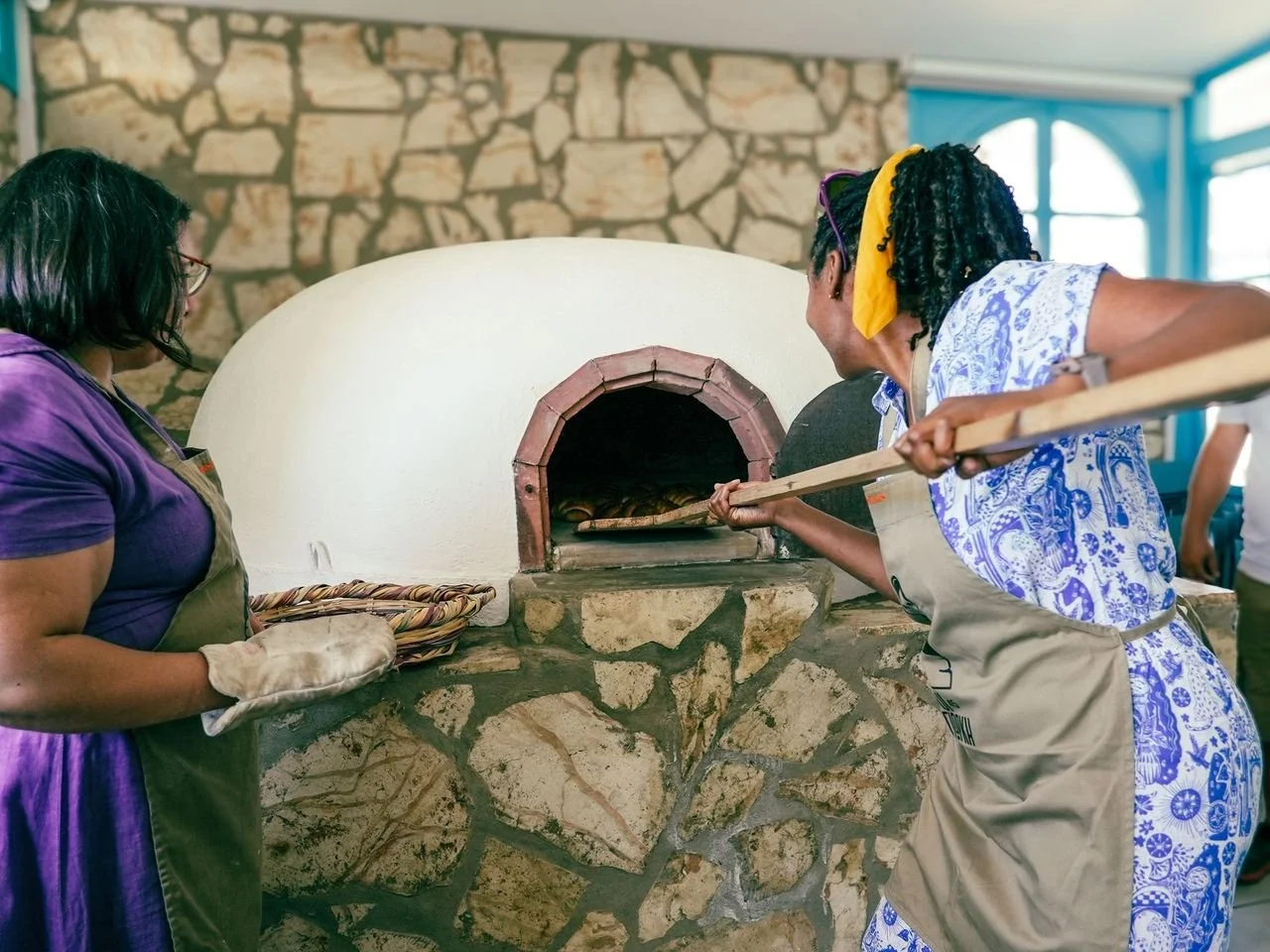
10 Traditional Foods to Try in Cyprus
Written by: Sophie Echeverry
Cyprus is a sun-soaked island where food is more than sustenance — it’s culture, hospitality, and connection. Meals are shared, celebrated, and deeply tied to the island’s history, geography, and family traditions. From coastal villages to mountain towns, tasting local dishes is one of the best ways to understand Cyprus.
1. Halloumi – Cyprus’s Culinary Icon
Halloumi cheese is perhaps Cyprus’s most famous culinary export. Traditionally made from goat and sheep milk, it has a firm texture that holds up beautifully when grilled, fried, or added to salads. On your travels, you’ll find halloumi served at nearly every meze or village taverna. Its salty, tangy flavor and squeaky texture make it unforgettable, and it’s often featured in local festivals or freshly prepared in markets. Tasting halloumi offers more than flavor—it’s a connection to centuries of Cypriot dairy traditions.
2. Cyprus Mezze – The Ultimate Shared Meal
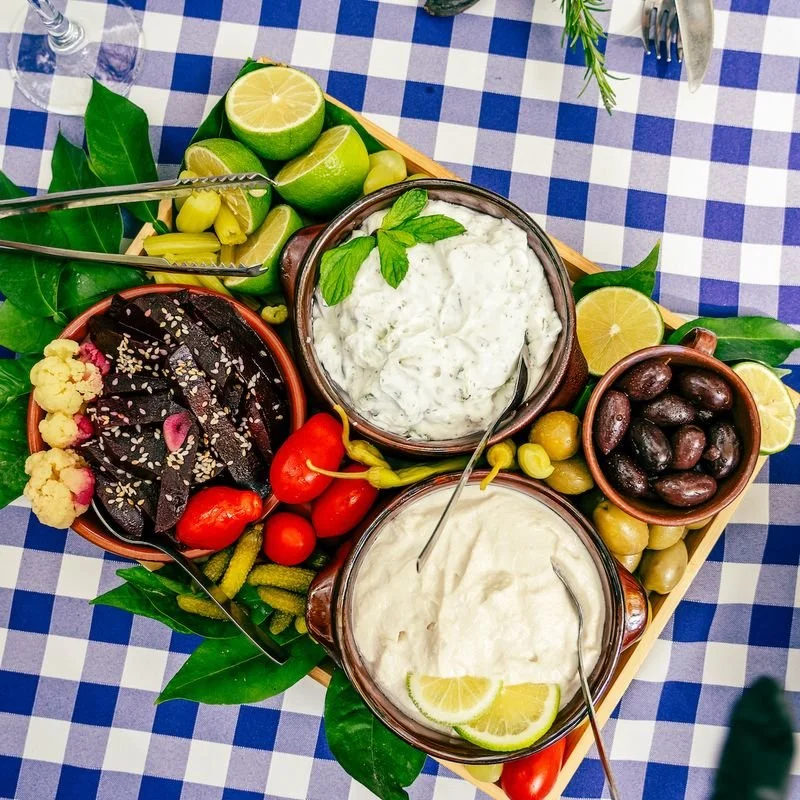
More Than a Meal: The Art of Cypriot Meze
A true Cyprus meze can include 20–30 dishes, ranging from dips like tzatziki and tahini to grilled vegetables, seafood, meats, olives, and freshly baked bread. This isn’t just a meal; it’s a social ritual, meant to gather people around the table and celebrate hospitality. Each dish tells a story: local herbs reflect mountain valleys, olive oil speaks to centuries of cultivation, and every bite is a lesson in tradition and generosity. Travelers experience meze best in village tavernas or family-run restaurants, where sharing and conversation are as important as the food itself.
3. Loukanika – Village Sausages
Loukanika are spiced Cypriot sausages, often made with pork, herbs, and occasionally a hint of wine. They’re grilled or fried and served as part of a meze or as a street snack. Every bite reflects regional flavors, from local herbs to traditional curing methods, giving insight into how food connects rural communities with cultural identity. Tasting loukanika in a small village or at a local market is like stepping into the daily life of Cypriot locals.
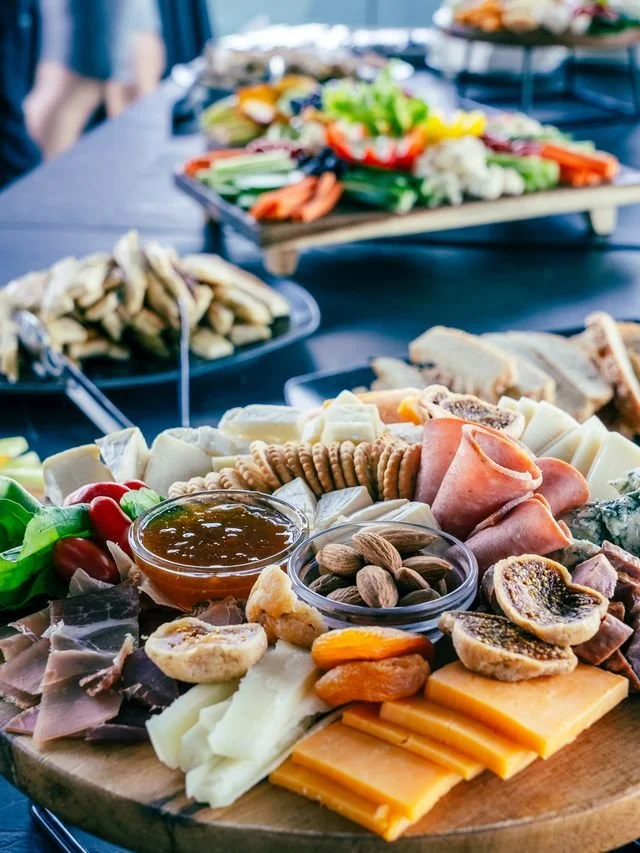
Everyday Ingredients, Lasting Traditions
4. Anari Cheese – Light & Fresh
Anari is a soft, fresh cheese often served with honey or baked into pastries. It’s mild, slightly sweet, and incredibly versatile. In Cyprus, it’s used both as a breakfast treat and a dessert ingredient. Trying Anari helps travelers understand the importance of dairy in Cypriot cuisine, and how simple, seasonal ingredients are celebrated in everyday meals.
5. Moussaka – Mediterranean Comfort
The Cypriot version of moussaka layers eggplant, potatoes, and spiced meat, all topped with a rich béchamel sauce. This dish is hearty, fragrant, and steeped in Mediterranean tradition. Beyond the flavors, it tells a story of how Greek, Ottoman, and Middle Eastern culinary influences converged on the island. Enjoying it in a village taverna allows travelers to taste history while soaking in the local atmosphere.
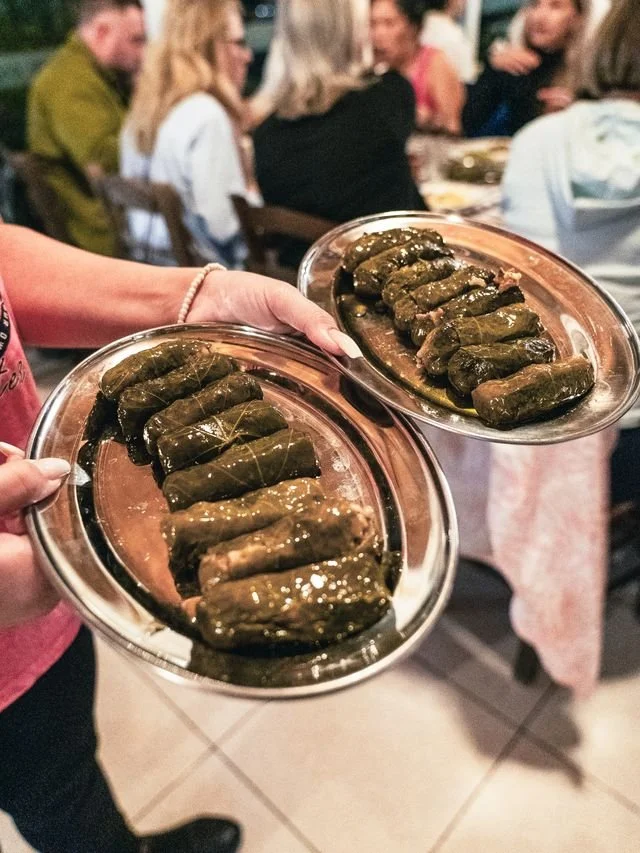
Food Meant to Be Shared
6. Grape Leaf Rolls – Traditional Dolmades
Grape leaf rolls, or dolmades, are tender vine leaves stuffed with a mixture of rice, herbs, sometimes minced meat, and pine nuts, then gently simmered in lemony olive oil. Eating dolmades gives travelers a taste of Cyprus’s culinary ingenuity, where simple, local ingredients are transformed into dishes that have been passed down for generations. They reflect the importance of family, seasonal harvests, and shared meals—core elements of Cypriot hospitality.
7. Many Fresh & Colorful Salads
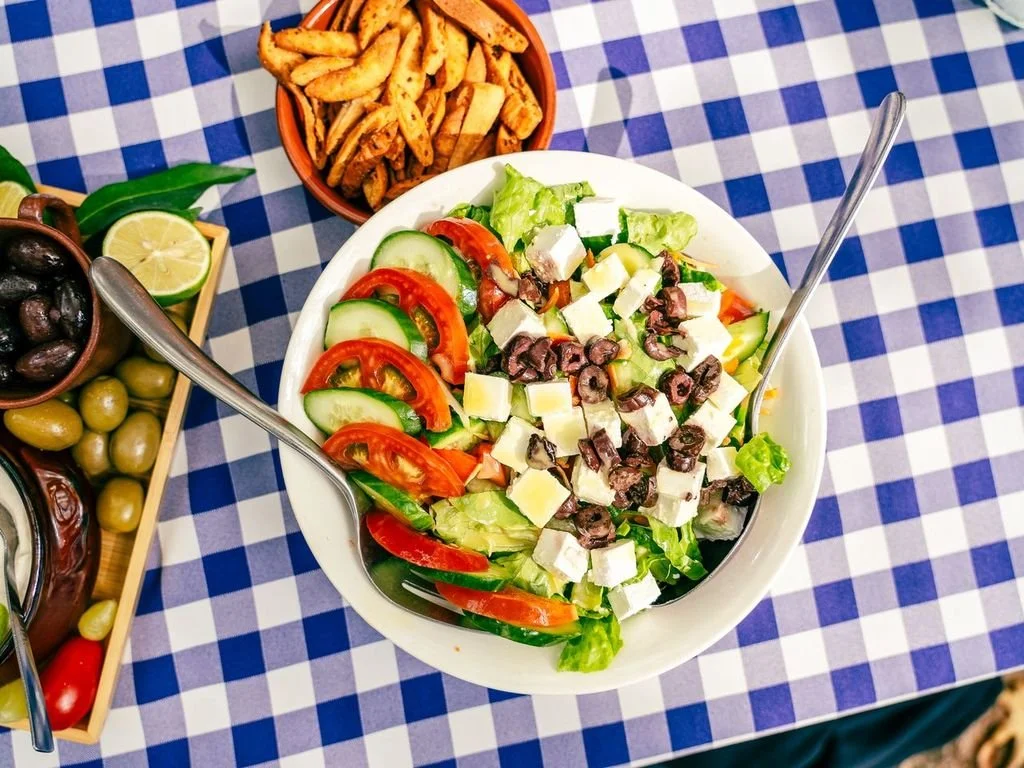
More Than a Greek Salad
Cypriot salads go beyond the standard Greek salad, featuring locally grown tomatoes, cucumbers, peppers, fresh herbs, olives, and halloumi. A drizzle of native olive oil completes the dish. Eating it is like tasting the Mediterranean sun and soil in every bite, offering a sensory connection to Cyprus’s agricultural heritage. These salads are often accompanied by bread baked on-site, creating a simple yet authentic culinary experience.
8. Cypriot Honey Liquid Gold of the Island
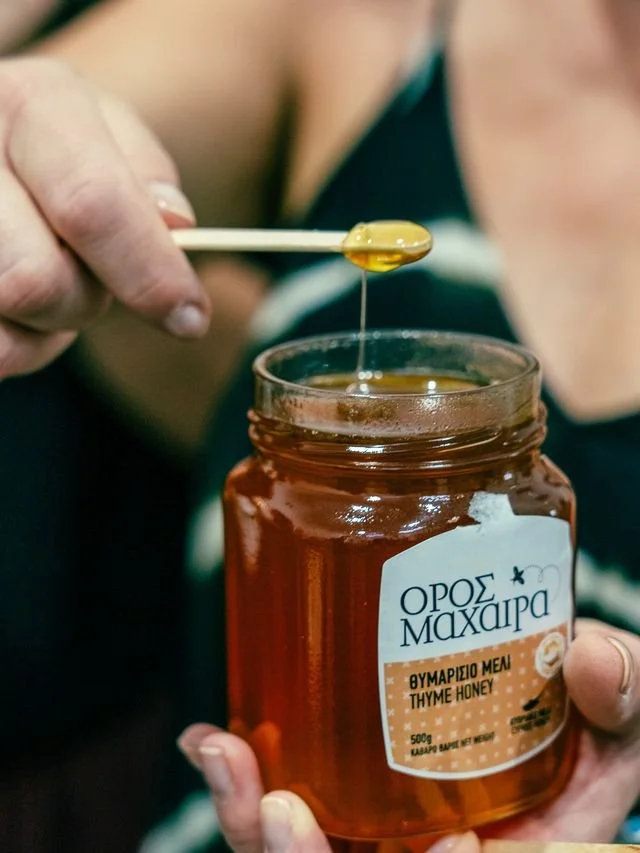
The Sweet Heart of Cyprus
Honey is a central part of Cypriot culinary and cultural life. Produced in mountain villages and coastal areas, it is often drizzled over halloumi, pastries, or yogurt, used in sweets, or served with coffee as a symbol of hospitality. Local varieties like thyme, pine, and carob honey each have distinct flavors tied to the island’s flora. Sampling honey is not just tasting sweetness—it’s experiencing the landscapes, seasonal rhythms, and care of local beekeepers who have preserved these traditions for generations.
9. Carob – Cyprus’s Black Gold
Carob trees have been cultivated for centuries on the island. The pods are used to make syrup, powder, and traditional sweets. Carob reflects Cyprus’s agricultural ingenuity and desert-adapted crops. Tasting carob products connects visitors to the island’s history of trade, resourcefulness, and culinary creativity.
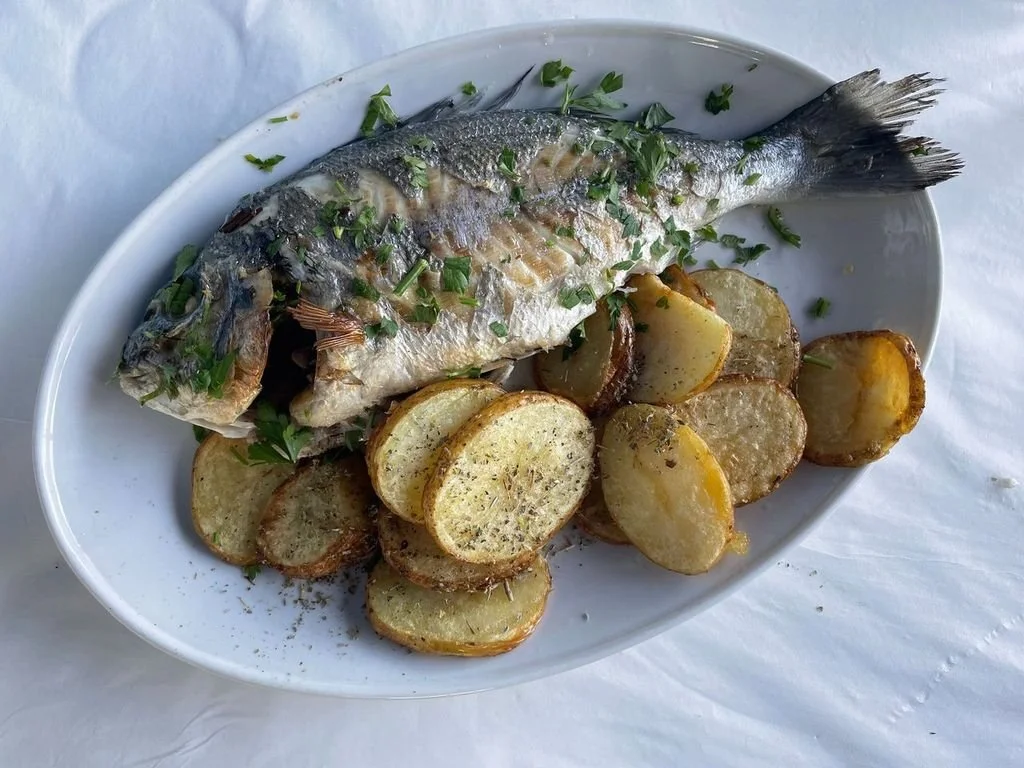
Flavors of the Mediterranean Tide
10. Fresh Seafood – From Coast to Table
Cyprus’s Mediterranean location ensures a bounty of fresh fish and seafood, from red mullet to squid and octopus. Often simply grilled with lemon and olive oil, seafood on the island celebrates freshness and the sea’s influence on local life. Sampling it at a seaside taverna or harbor restaurant connects travelers to both Cyprus’s culinary traditions and its coastal culture.
Why Food Matters in Cyprus
Eating in Cyprus is storytelling, culture, and connection in every bite. Shared meals, meze spreads, and local delicacies invite travelers to participate in traditions, meet locals, and feel the rhythms of daily life. From grilled halloumi in village squares to fresh seafood on the coast, food is one of the most intimate ways to experience Cyprus.
More food blogs for you





Discover why Southwest France captivates with medieval history, rich cuisine, world‑class landscapes, and slow culture — perfect for a transformative journey.