
Article written by Samantha Zachary and edited by Sophie Echeverry
For nearly 10 years, I thought about visiting Peru.
The desire started in a dimly lit college classroom in Lower Manhattan, where the work of Peruvian photographer Martín Chambi seemed to pull me into the projector screen. As I became more interested in hiking, cuisine, other cultures, and documentary photography, the vision of everything I could connect with in Peru only grew.
So when I learned that Traverse Journeys was offering an alternative hiking route to the Classic Inca Trail to Machu Picchu, and needed photos of the trek to Vilcabamba, it seemed like a sign. The time had finally come.
Cusco, sitting at roughly 11,000 feet, gave us a first taste of what was ahead. We wandered its markets and streets, visited Qorikancha, learned about the history of the Quechua people and Spanish colonization, and, importantly, gave our bodies time to adjust to the altitude.
Then, at 3 AM, my friend and I left Cusco for the long drive to the beginning of the Vilcabamba Trek in Peru.
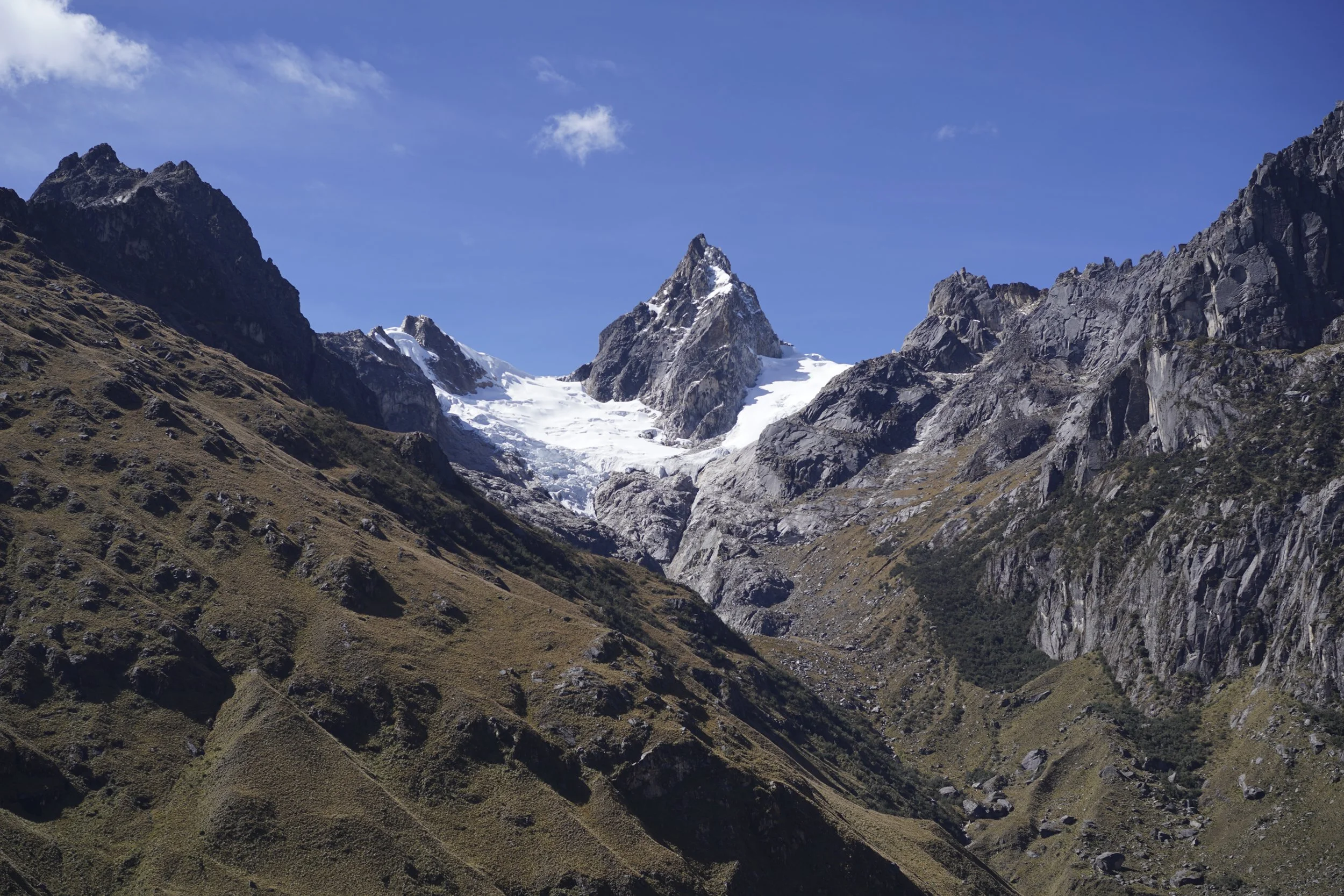
Vilcabamba, Peru by Samantha Zachary
What Is the Vilcabamba Trek?
The Vilcabamba Trek is a remote multi-day hiking route through the mountains northwest of Cusco, following ancient Inca paths through the region that became the final refuge of the Inca Empire after the Spanish conquest.
Unlike the Classic Inca Trail, this isn't primarily a route for hiking directly into Machu Picchu. The alternative trek takes you deeper into remote Andean valleys, across high mountain passes and through dramatically changing landscapes, with far fewer hikers along the way.
That was part of what drew me to it. Rather than experiencing Machu Picchu as the singular destination of the trip, I wanted to understand more of the landscape and history surrounding it.
The Beginning: From Cusco to the First Night on the Trail
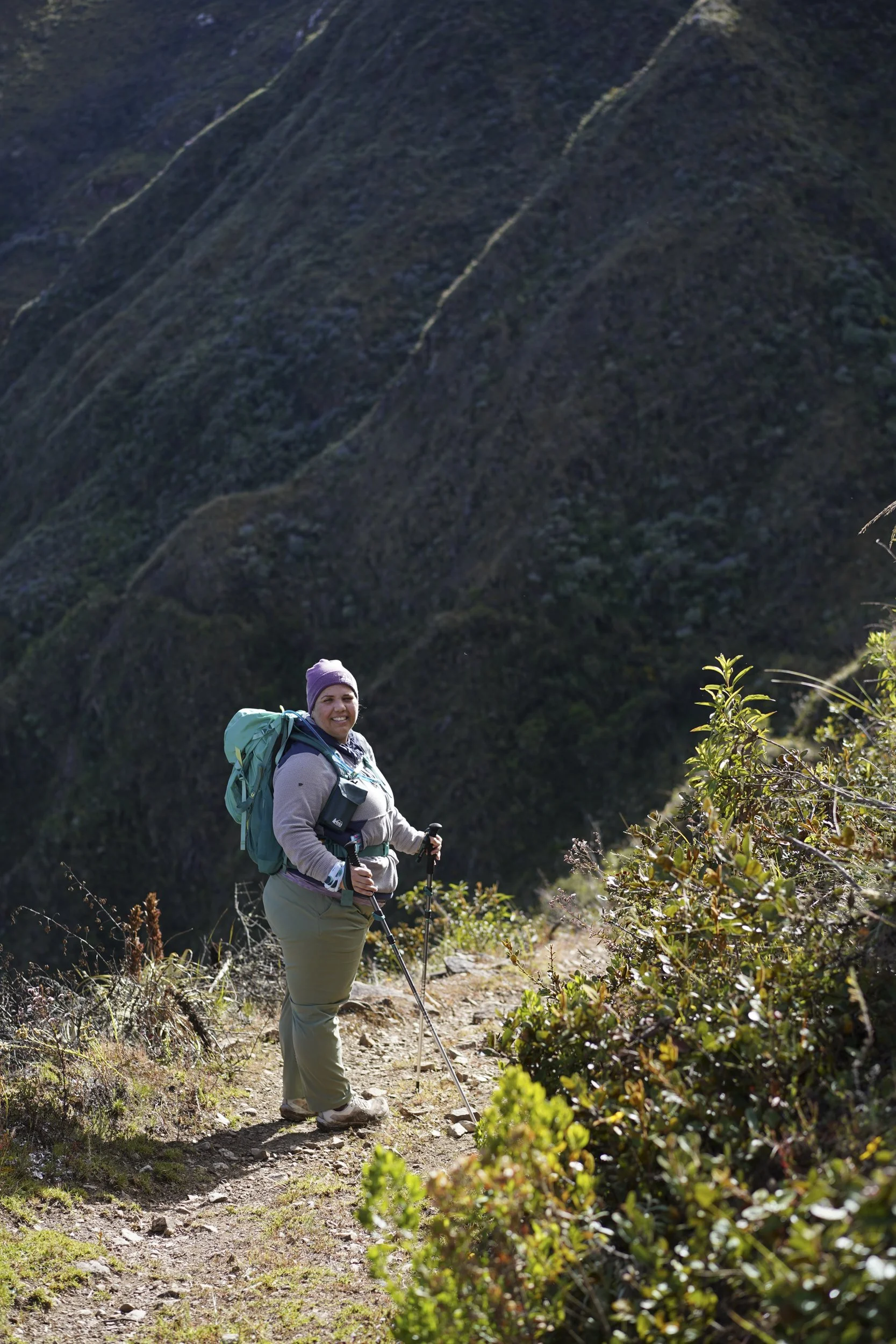
Trekking Vilcabamba by Samantha Zachary
Although it was early, I loved watching the outskirts of Cusco pass in the dark. We stopped at a local bread stand to pick up loaves for the hike, and as the sun rose, we continued along winding, often bumpy mountain roads. We stopped at a mountain pass overlooking the cloud forest and later at a local coffee producer near Santa Teresa for a burst of caffeine before the final stretch of the drive.
After one last summit in the van, we descended toward the trailhead. There we met our arriero, who would travel with the horses carrying our equipment, and watched as he and our cook, Marco, prepared everything for the days ahead. Before we left, the arriero's young son burst into laughter as he placed his hat on one of the mules.
It seems animals in human clothes are funny no matter what hemisphere you're in.
We started by descending along a slightly wet, brush-covered trail, with an enormous clear vista opening in front of us. After crossing the river at the bottom of the valley, we began climbing the other side. I remember trying to pace myself with the photographs, knowing there had to be many more beautiful passes ahead.
As the switchbacks began, the altitude started affecting my friend much more than she expected. We slowed down and eventually found ourselves still hiking after sunset. Rather than immediately reaching for our headlamps, our guide Abel encouraged us to wait until the last possible moment.
“See if you can just use the moonlight to see what you need to in front of you.”
The moon was almost full, and for a while we walked surrounded by trees, small animal sounds, and the night sky. Even after we finally switched on our lamps and arrived at camp, the feeling stayed with me. Looking out into the cloudy night from our tents, I had never felt less afraid of the dark.
The Middle: Deeper Into the Vilcabamba Trek
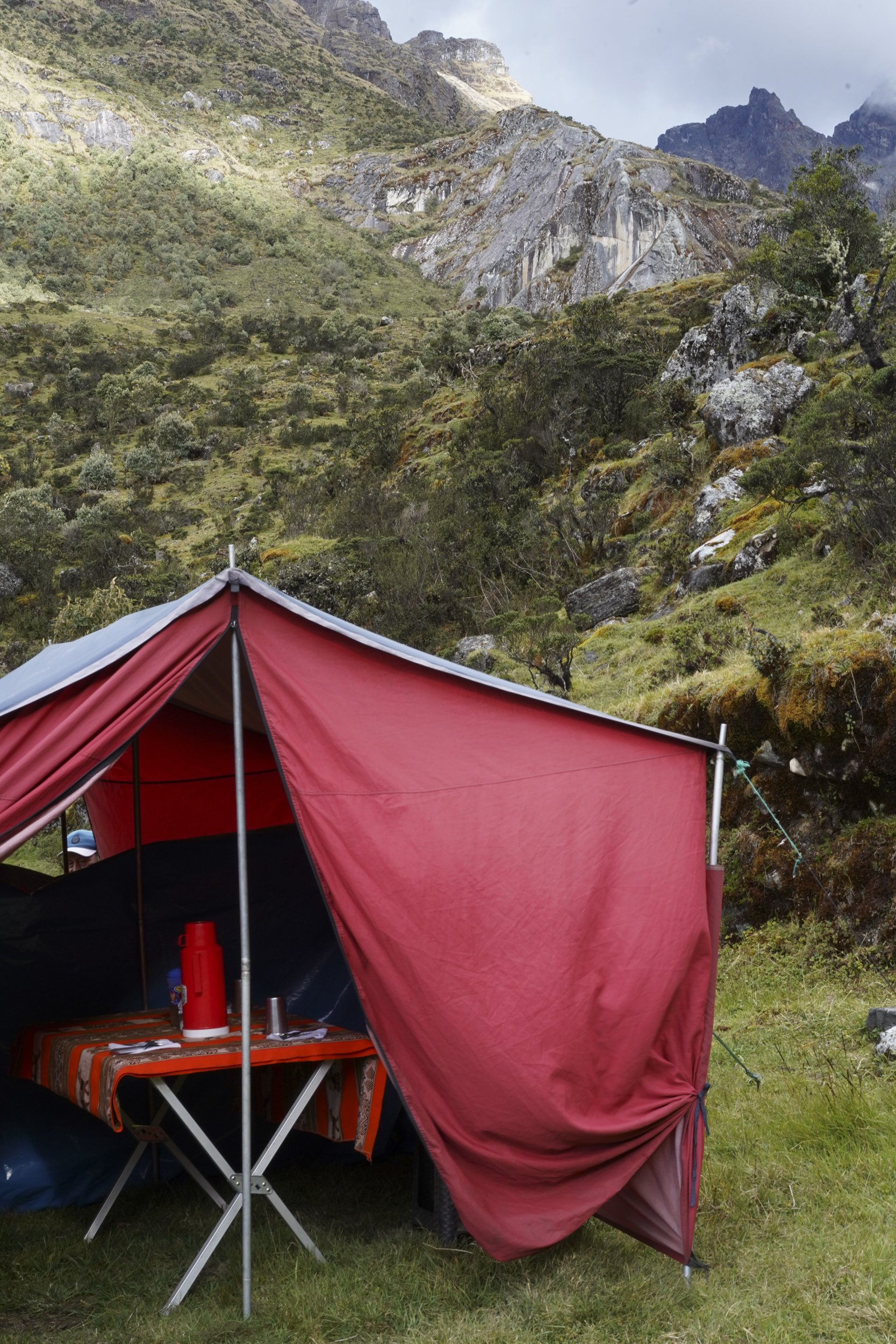
Accomodation in the mountains by Samantha Zachary
The next morning, we fueled up with coca tea and a family-style breakfast prepared by Marco and headed out for what would become a roughly 10-hour day on the trail.
Over those hours, we passed through environments I didn't think could possibly exist so close together. There was bright tropical foliage on the side of a mountain at nearly 13,000 feet, with pine trees across the valley. We crossed rivers by finding the right boulders while the horses passed us with our arriero and cook. We went from pushing large vines out of our path and fending off mosquitoes to putting on rain gear during a brief bout of hail, and then walking through green hills dotted with sheep and cows as glacial cliffs appeared in the distance.
My friend and I kept comparing parts of it to something out of The Lord of the Rings. It felt as though the landscape changed every few hours.
As we arrived at camp, I desperately needed to use the “facilities” and was promptly pointed toward some boulders at the edge of the property. Not my favorite part of hiking, but you have to do what you have to do. I found a spot and was just getting settled when a horse's head appeared from behind the boulder. It stayed there for a few seconds before slowly backing away behind the rock, apparently deciding to give me some privacy.
And just as I was at risk of taking nature too seriously.
That evening, it was cold in the valley, but the stars shone brightly above us. We fell asleep listening to the sound of the river nearby.
The Final Push: Ancient Inca Roads and the High Pass
That same river followed us into the next morning as we packed up and continued along the trail. By then, the altitude and my friend had reached something of an impasse, so she continued part of the route on a local horse while Abel and I climbed on foot.
We made our way slowly and steadily toward a mountain pass at nearly 15,000 feet, with the view over the valley getting better with each set of ancient Inca stone steps.
The trail was breathtaking in more ways than one. I felt strong and centered as I pushed up the path, which was a new and exciting feeling after struggling on previous high-altitude treks. At the same time, I felt incredibly small in comparison to everything around me: tall grass moving in the wind, ancient Inca stone trails still fitted together beneath our feet, and a pair of condors circling overhead as we reached the top.
On the descent, Abel explained how these trails had been maintained by the Inca Empire and Quechua people and traveled again and again over generations. Even during our own trek, we heard that our arriero's wife could apparently complete in six hours a stretch that had taken us two days.
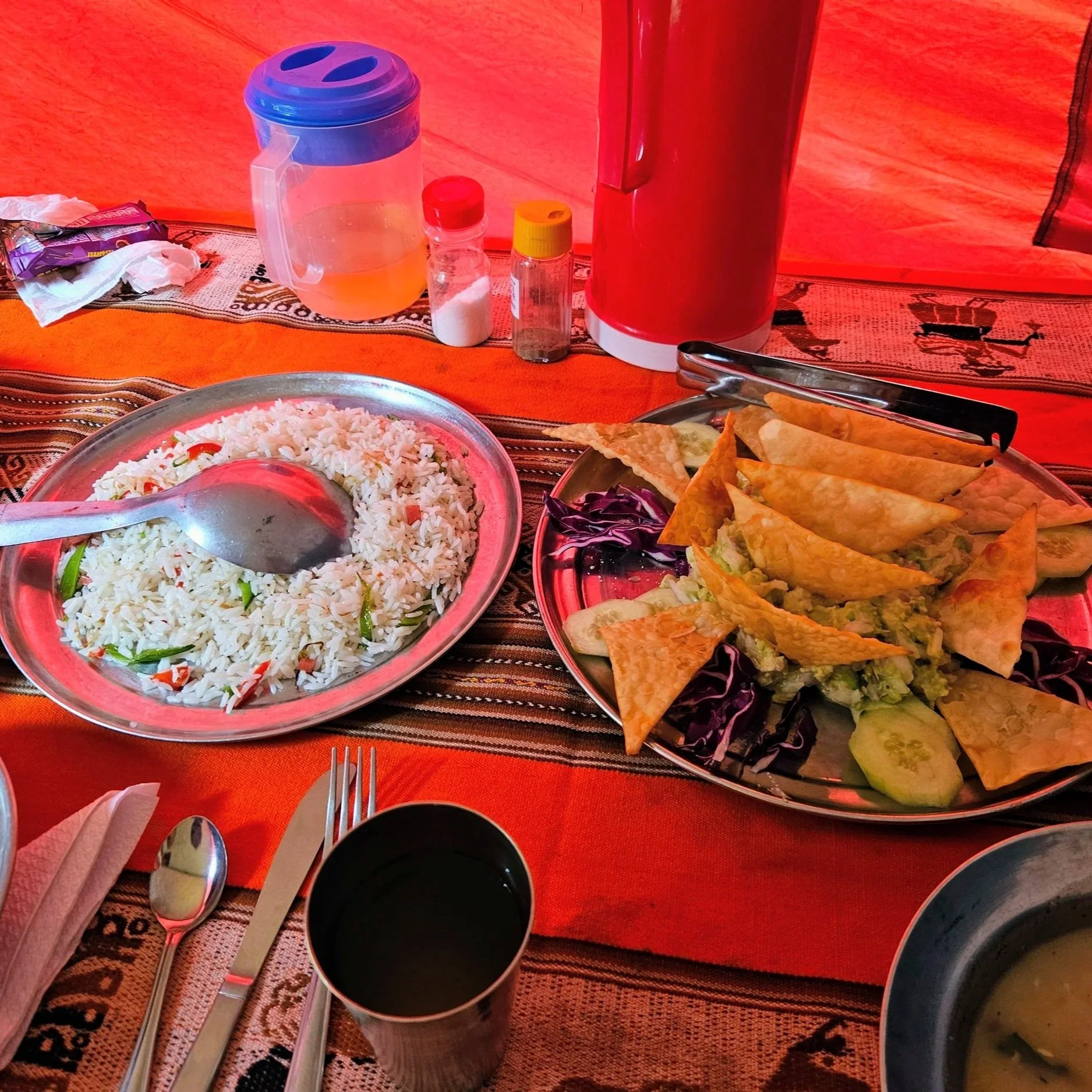
Lunch in the mountains by Samantha Zachary
What a privilege to be able to walk in their footsteps for a few days.
At the end of the hike, we sat down in the cook tent for a lunch of stuffed trout, caught locally while Marco waited for our slow selves to arrive, alongside fresh guacamole, soup, and vegetables.
Someone give this man a Michelin star.
When the Trek Doesn't Go According to Plan
From there, the plan was to continue to Vilcabamba itself. Hidden deep within the mountains northwest of Cusco, the Vilcabamba region became the final refuge of the Inca resistance after the Spanish conquest, and the Neo-Inca state maintained its capital there until the fall of Vilcabamba in 1572.
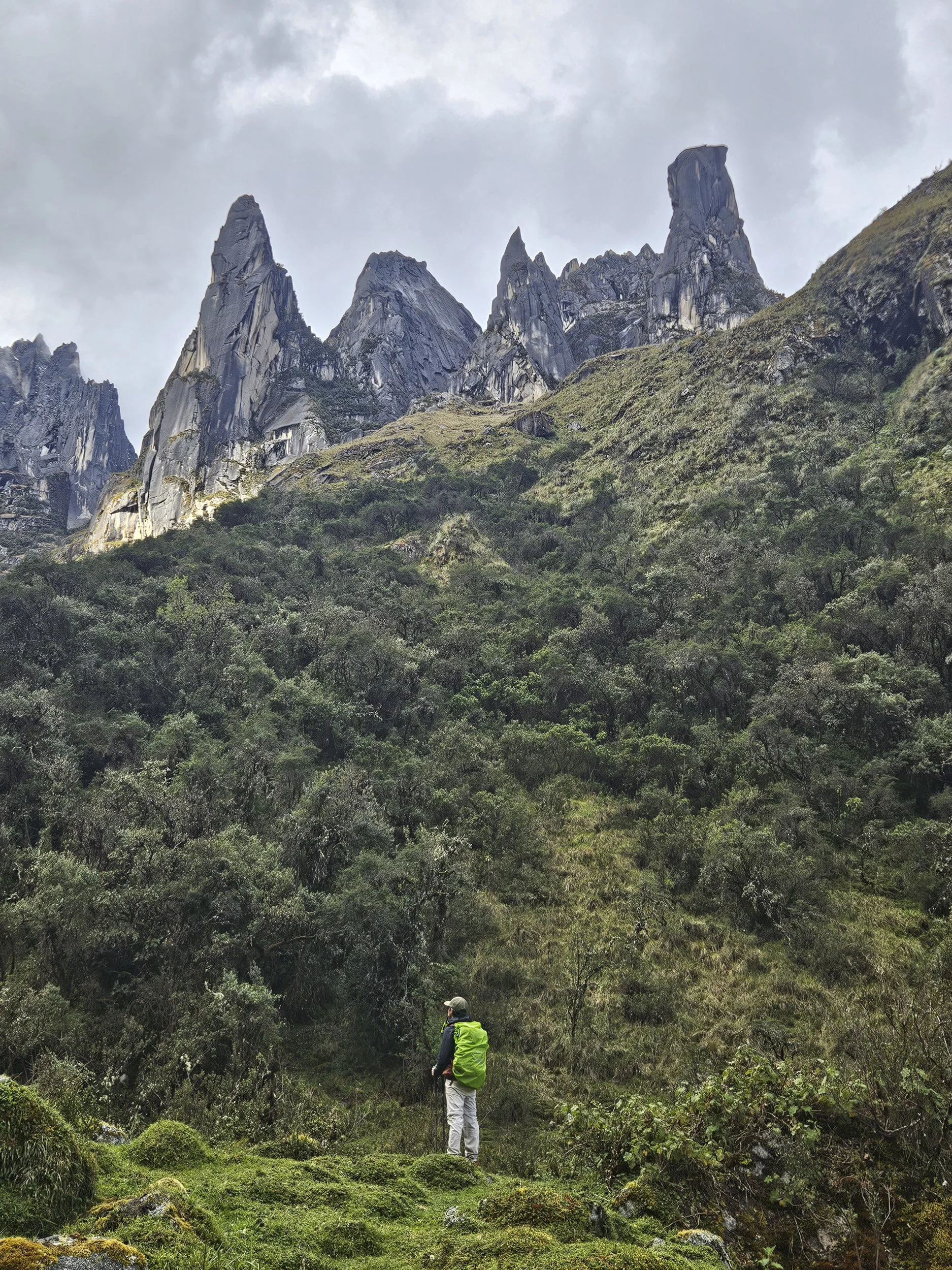
The mountains of Vilcamamba by Samantha Zachary
To be clear, our plan was to reach it on foot and explore the archaeological complex before our final night camping. That isn't what happened.
The altitude was still affecting my friend, so our gear was loaded into the back of a local pickup while our arriero began the journey home with his horses. We drove toward Vilcabamba and started making our way up the hill toward the site, but the sun was setting rapidly and it became clear that continuing wasn't the right decision.
So we turned around without seeing it.
I can imagine any number of scenarios where this turns into a huge problem for a group. And that would be justified. It's a long way to travel not to see the proposed destination.
But as we headed back down the hill, I felt thoroughly content. I had just spent days in some of the most beautiful valleys I'd ever seen. I was with people whose company I enjoyed, I felt healthy, and I was learning constantly. Missing one archaeological site didn't erase any of that. In fact, it reminded me that the best trips aren't always the ones where everything goes according to plan.
And, well, now I had a reason to return.
Arriving at Machu Picchu After the Vilcabamba Trek
The next morning, we took the train toward Machu Picchu and met back up with the other members of our group after their hike along the Classic Inca Trail.
I won't try to do justice to Machu Picchu here; plenty of writers have succeeded at that already. I will say that even with the other tour groups and the tourist café at the entrance, it still felt deeply sacred. Clouds drifted across the surrounding peaks, revealing terraces and temples before hiding them again, and a part of me wanted to stay there all day.
What surprised me most wasn't Machu Picchu itself. It was the way I arrived there.
After the Vilcabamba Trek, Machu Picchu felt less like an isolated destination and more like the final page of a much longer story. Over the previous days, I had walked ancient Inca roads, climbed mountain passes above 4,500 meters, listened to stories of Quechua traditions, and learned why Vilcabamba became the final refuge of the empire.
The landscapes gave context to the history, and the history gave meaning to the hike. By the time I reached Machu Picchu, I understood, at least in a small way, more of the landscape and culture that had made it possible.
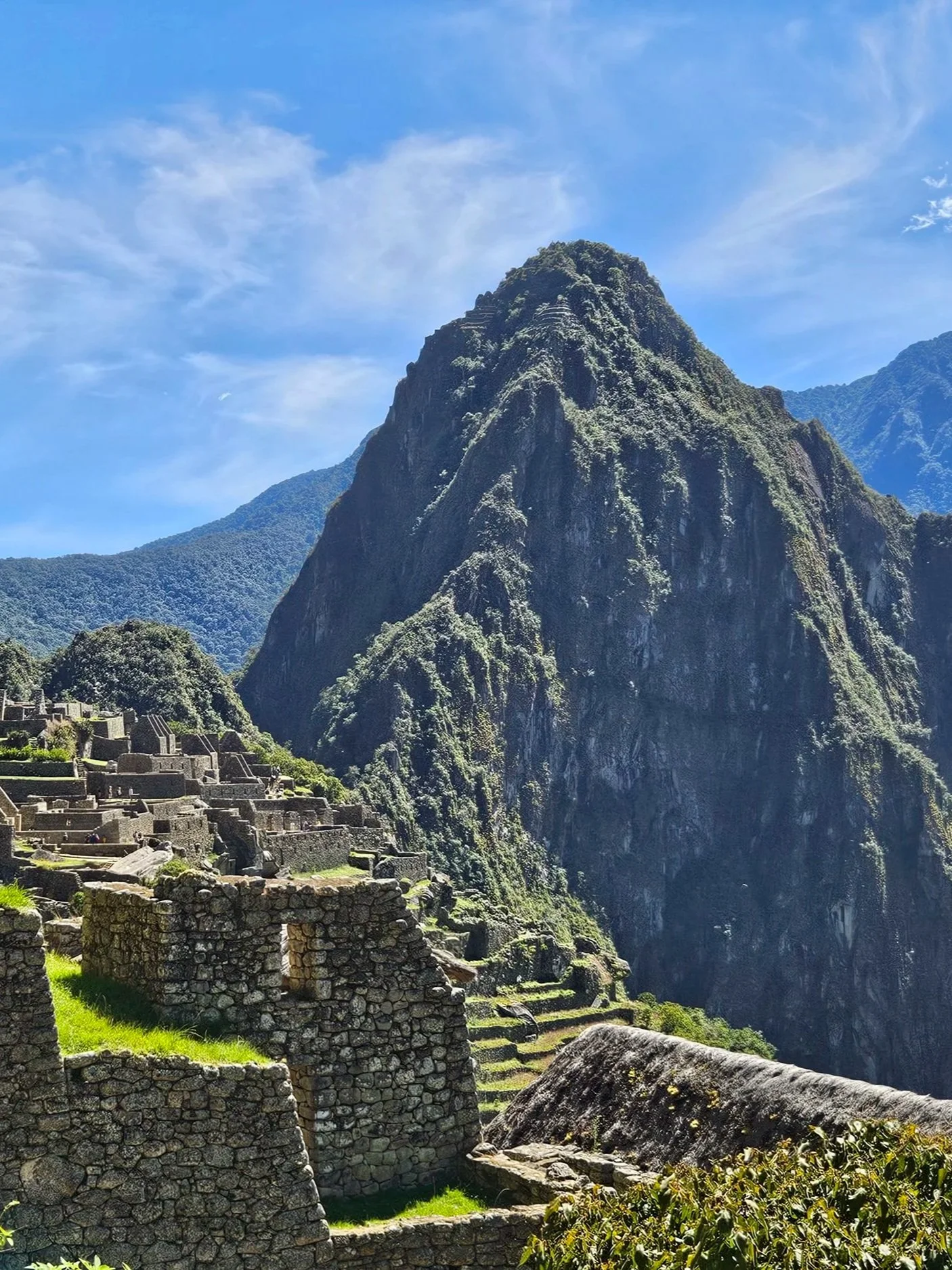
Maccu Picchu by Samantha Zachary
The Alternative Trek vs. the Classic Trail: Different Routes, Different Stories
Later, over lunch, our group traded stories from our respective hikes.
Those who had taken the traditional route described the excitement of arriving through the Sun Gate, its famous campsites, and the energy of sharing the trail with hikers from all over the world.
Our stories sounded completely different. We talked about hiking for hours without seeing another group, crossing rivers beneath towering cliffs, sharing camp with our guide, cook, and arriero, and watching condors circle above ancient stone staircases that have connected these mountains for centuries.
Neither experience sounded better than the other. They simply offered two different ways of understanding Peru.
If your dream is to reach Machu Picchu along one of the world's most iconic trekking routes, the most common route is unforgettable. But if you're looking for a quieter, more immersive alternative to the Inca Trail in Peru, one that combines remote landscapes, history, culture, and long days of hiking, the other route offers something genuinely different.
For me, that was exactly what I had been looking for.
Why I'd Choose the Vilcabamba Trek Again
Throughout the trip, friends and family kept asking me the same question: “So, how's Peru?”
Every time I tried to answer, I found myself listing experiences rather than explaining how they felt. I would mention hiking above 4,500 meters without struggling for breath for the first time, photographing landscapes I'd dreamed about for years, speaking more Spanish than I had in ages, or ending each evening around a table with people who had been complete strangers only a few days earlier.
But none of those moments on their own really explained why the trip stayed with me.
What surprised me most about Peru was the way everything connected. Choosing the alternative trail rather than the classic one shaped that perspective in ways I hadn't expected. Walking through remote valleys, camping beneath the stars, and following ancient paths created a slower, more intimate introduction to the country. It gave me the time and space to notice the details that often become the most lasting memories: the sound of the river outside our tents, the laughter of the arriero's son before we set off, the care Marco put into every meal, and the stories Abel shared as we crossed the mountains.
When I first imagined traveling to Peru nearly a decade ago, I thought it would be one of those once-in-a-lifetime trips you dream about, experience, and then carry with you forever.
Instead, it felt like the beginning of something.
Hasta la próxima, Perú.
Ready to Take the Trail Less Traveled?
If the Vilcabamba Trek sounds like your kind of Peru adventure, come experience it for yourself. Explore the full itinerary, see what’s included, and find upcoming departure dates for Traverse Journeys’ Vilcabamba Trek.
More peru blogs
FAQS
-
Traverse Journeys’ Vilcabamba Trek is a 4-day, 3-night trekking experience, but the adventure begins well before you hit the trail. It’s part of a 9-day journey through the Sacred Valley, from Cusco to and Machu Picchu, designed to give you a deeper understanding of Andean culture, history and traditions before setting off into the mountains.
-
The dry season, generally from May through September, offers more predictable conditions for trekking in the Peruvian Andes. Even during these months, mountain weather can change quickly, so hikers should be prepared for cold temperatures, rain, and significant changes in conditions throughout the day.
-
The Vilcabamba Trek is a challenging multi-day trek involving long hiking days, significant elevation changes, remote terrain, and high-altitude passes. Previous multi-day hiking experience is helpful, but you don't need technical mountaineering experience. Good physical preparation and proper acclimatization are important.
-
The route reaches nearly 15,000 feet (4,500 meters) at its highest point.
-
Layers are essential, as the route crosses different elevations and climates. Bring comfortable hiking boots, rain and sun protection, warm layers, a reusable water bottle, headlamp and a comfortable daypack. Sleeping bags and trekking poles can be rented or purchased in Cusco with help from our local guides. Pack light, but be ready for warm days, cold nights and quickly changing Andean weather.
-
Previous multi-day hiking experience is helpful, particularly because of the remote terrain and long days on the trail. You don't need to be an expert mountaineer, but arriving physically prepared and comfortable with several consecutive days of hiking will make the experience much more enjoyable.
-
Cusco is a natural base for acclimatization before beginning the Vilcabamba Trek. Spending a few days there before setting out gives your body time to adjust while also offering the chance to explore the city's Inca and colonial history.



Looking for meaningful Peru gift ideas? Discover what to bring home from Cusco and the Sacred Valley, from Andean textiles and alpaca to chocolate, Maras salt and local ingredients.