
Women to Know: Egypt
Written By: Sophie Echeverry
The Story of Egypt Is Also a Story of Women
Egypt is a land shaped by stories — carved into stone, carried through generations, and brought to life by the women who have long defined its spirit. From the powerful queens of the Nile to the artists, entrepreneurs, scholars, and changemakers of today, Egyptian women have always stood at the center of the country’s cultural and social evolution.
Their influence lives everywhere: in the rhythm of bustling markets, the preservation of ancient traditions, the creativity of contemporary art and literature, the flavors of family kitchens, and the movements reshaping modern Egypt. Across centuries, women in Egypt have led dynasties, challenged convention, safeguarded heritage, built businesses, nurtured communities, and driven meaningful change with resilience and vision.
To truly understand Egypt is to understand the women who continue to shape its identity — past, present, and future.
Ancient Egypt: Where Women Held Power
Long before the modern world began to speak of gender equality, Egypt had queens who ruled empires and priestesses who advised gods. Hatshepsut, one of the most powerful pharaohs in history, reigned in peace and prosperity, commissioning temples and trade routes that enriched the entire kingdom. Nefertari, the great royal wife of Ramses II, was celebrated for her intellect and diplomacy, her name etched on temple walls as “the one for whom the sun shines.”
Women in ancient Egypt owned land, led temples, and worked as healers and artisans. Their presence wasn’t a rebellion, it was part of life. A reflection of balance.
The echoes of those early dynasties still linger in Egyptian culture: in the resilience of women leading businesses, in the mothers who hold communities together, and in the artists, scientists, and dreamers who continue to define what it means to lead.
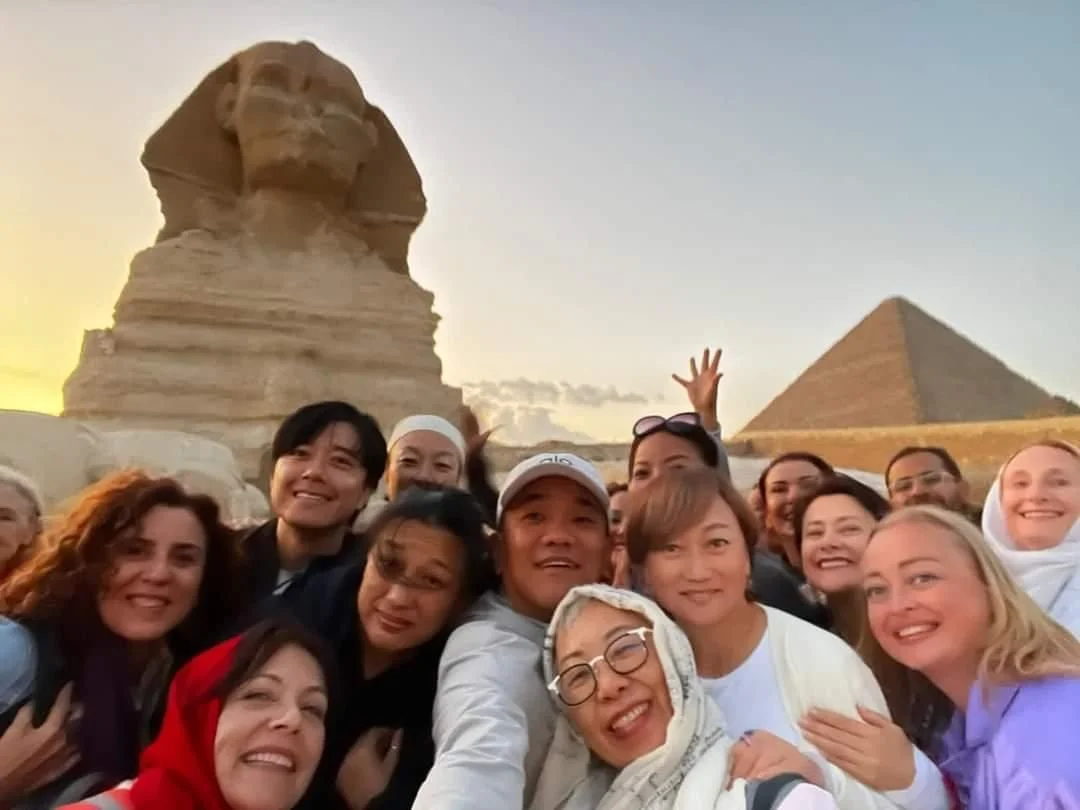
Group by the Egyptian Pyramids
Voices of Courage and Reform
Fast forward a few thousand years, and Egyptian women are still rewriting history. In the early 20th century, Huda Sha’arawi stepped off a train in Cairo and removed her veil in public, sparking the Egyptian feminist movement. Her act was both personal and political, a declaration that women’s voices belonged in the nation’s future.
Decades later, Nawal El Saadawi, a doctor, writer, and fearless activist, picked up that torch. She wrote about women’s rights, freedom, and social justice with fierce honesty — often at great personal risk. Her novel, Woman at Point Zero, tells the haunting and powerful story of Firdaus, a woman navigating oppression, survival, and self-determination in Egypt. The book resonates far beyond its pages, inspiring generations to question, to speak, and to act. If you’re curious to dive deeper into Egyptian literature and discover other essential reads before your trip, check out our Egyptian Books for the Road Blog.
These women didn’t just dream of equality, they built it, piece by piece, through education, literature, and protest.
Innovators, Athletes & Modern Pioneers
Today’s Egyptian women continue to expand what’s possible. They’re coding, cooking, climbing, and changing narratives.
Nour Emam, founder of Mother Being, is breaking taboos around reproductive health and empowering women to speak openly about their bodies. Her platform blends education with empathy, a modern act of revolution.
Heba Elsewedy, known as the “Mother of the Revolution,” turned her compassion into action by founding the Ahl Masr Foundation to support burn victims and families in need.
In sports, Farida Osman, the “Golden Fish of Egypt,” became the country’s first world-class swimmer to win multiple World Championship medals, showing young women that excellence knows no limits.
In the culinary world, Chef Amira Elhamy is redefining Egypt's gastronomic landscape. Founder of Bongoyo, a restaurant that explores the rich flavors of Sub-Saharan Africa, Elhamy combines her formal training from Leiths School of Food & Wine in London with a passion for sustainable and innovative cooking. Her approach honors traditional ingredients while embracing modern culinary techniques, reflecting a commitment to both heritage and sustainability.
Building Futures: Women Leading Sustainability & Innovation
Beyond the spotlight, women are at the forefront of transforming Egypt’s economy and environment. As we explored in our food blog, initiatives like Nawaya are part of this movement, connecting agriculture, tradition, and innovation.
The Nawaya Initiative, co-founded by Laura Tabet, empowers small-scale farmers, many of whom are women, to adopt regenerative agriculture practices that restore the land and promote healthier, more traditional eating habits. Curious enough? Explore our most recent blog on Egypt’s Food Culture.
Another inspiring example is Dr. Amal Saber Mohammed, a distinguished researcher at the Agricultural Research Center (ARC), who leads the Egyptian Women in Rural Economic Development project. This initiative equips women with skills in agricultural technology, enabling them to actively participate in sustainable economic activities and make a meaningful impact on Egypt’s agricultural landscape.
MORE BLOGS like this
FAQs
-
Yes. Women in ancient Egypt could own land, lead temples, and work as healers and artisans, and some — like Hatshepsut — ruled as pharaoh in their own right rather than simply as consorts.
-
Hatshepsut was one of the most powerful pharaohs in Egyptian history, known for ruling during a period of peace and prosperity and for commissioning major temples and trade routes that enriched the kingdom.
-
Nefertari was the great royal wife of Ramses II, celebrated for her intellect and diplomacy. Her name appears on temple walls with the title "the one for whom the sun shines."
-
Ancient Egyptian women could own property, run businesses, and hold religious and professional roles such as temple leaders, healers, and artisans — a level of legal and social standing that was unusual for the ancient world.
-
The article frames the legacy of figures like Hatshepsut and Nefertari as part of a continuous thread running through Egyptian women today, who lead businesses, hold communities together, and shape the country's art, science, and culture.
-
Because women have been central to Egypt's identity across every era, from ruling queens and priestesses in antiquity to the entrepreneurs, artists, and scholars driving the country's culture and progress today.




Discover the women of Cyprus who shaped the island through literature, craft, activism, sustainability, and royal history.