
One More Thing Before You Fill Your Suitcase
Before packing food, herbs or agricultural products, check the customs rules of the country you're traveling home to.
Meat, dairy, fresh fruit and vegetables are among the categories that commonly face restrictions. Commercially packaged dried spices and teas may be easier to travel with, but rules vary by destination.
And whatever you do, don't try to bring home antiquity. Ancient artifacts belong in Egypt, not between your socks. Do not buy antiquities or anything represented as an ancient artifact unless you are dealing with a properly authorized and documented seller.
Where to Buy Authentic Egyptian Souvenires
Some of the best places to shop in Egypt are the places where the crafts are actually made. Look for established artisan workshops, cooperatives, local producers and social enterprises rather than shops that carry identical products from across the tourist circuit.
In Cairo, look for independent makers and social enterprises; in Luxor, ask your guide about reputable alabaster workshops; and wherever you travel, don't be afraid to ask who made something, where it was produced and how the materials were sourced.
Fair Trade Egypt is another useful starting point if you're looking specifically for artisan-made products with a clearer connection to their makers and communities.
What to Buy in Egypt
1. Hand-Carved Alabaster
Alabaster has been worked in Egypt for thousands of years, appearing in vessels, sculptures and architectural elements from ancient Egypt through the centuries.
Today you'll find lamps, bowls, candleholders and decorative pieces—but you'll also find plenty of mass-produced imitations. Look for hand-carved Egyptian alabaster from a workshop or seller who can explain where the stone came from and who worked it. Natural stone will often show variation in color, veining and translucency rather than looking perfectly uniform. Though keep in mind that appearance alone can’t tell you where a piece was made. Ask where the stone came from, whether it was handcarved and who made it.
Also: perhaps don't choose the largest vase in the shop unless your airline is feeling generous.
Where to find: Look for established alabaster workshops, particularly around Luxor and Upper Egypt, where you can learn about the carving process and ideally see artisans at work.
Look for: Natural variation in the stone and a workshop or seller who can identify the maker and source of the material.
2. Egyptian Spices
A spice shop might be the fastest way to completely lose track of what you intended to buy.
Cumin, coriander, hibiscus, anise and spice blends are among the flavors and aromas you'll encounter in Egyptian markets and kitchens.
Rather than buying a mystery packet marketed purely to tourists, look for busy local spice shops with good turnover and ask about origin, freshness and what's actually inside a blend.
Small, useful and considerably easier to pack than alabaster.
Where to find: Local spice shops and established markets where Egyptians themselves shop, particularly sellers specializing in herbs, teas and spices.
Look for: Fragrant whole or ground spices with clear information about what you're buying and, when possible, where they were grown.

3. Egyptian Cotton
There's Egyptian cotton, and then there's cotton with “Egyptian” written very enthusiastically on the packaging.
True Egyptian cotton comes from specific varieties of Gossypium barbadense, a cotton species known for producing long, fine fibers that can be spun into smooth, strong yarns. Egypt became particularly famous for its long- and extra-long-staple cotton, which is why sheets, towels and other textiles are among the country's most recognizable products.
You'll also see thread count, which simply refers to the number of threads woven into a square inch of fabric. A higher number doesn't automatically mean better quality: the quality and length of the cotton fibers, how the yarn was spun and how the fabric was woven matter too. In other words, don't let an enormous thread-count number do all the convincing.
Where to find: Reputable Egyptian textile manufacturers, established cotton and linen shops, and retailers that clearly identify the manufacturer and fiber content.
Look for: Clear fiber-content labeling, Egyptian-grown long- or extra-long-staple cotton, transparent manufacturing information and well-constructed fabric.
Ask: Is this 100% Egyptian cotton or a blend? Where was the cotton grown? Where was the fabric woven and the final product manufactured?
4. Khayamiya Textiles
Khayamiya is a traditional Egyptian appliqué craft, created by stitching brightly colored pieces of fabric into intricate geometric, floral and figurative designs. Its name comes from the Arabic word khayma, meaning “tent,” reflecting its history as the decorative textile used to line and embellish tents for celebrations and gatherings.
The craft is particularly associated with Cairo's traditional tentmakers, who continue to cut and stitch these elaborate designs by hand. Today, you'll find Khayamiya transformed into everything from wall hangings and cushion covers to smaller decorative pieces that are considerably easier to negotiate with your suitcase.
Where to find: Head to Sharia al-Khayamiyya, or the Street of the Tentmakers, in historic Cairo, where workshops and shops specializing in the craft are concentrated.
Look for: Hand-appliquéd pieces where you can see the individual layers of fabric and stitching rather than a design simply printed onto cloth.
Ask: Was this piece made by hand? Who made it? How long did it take to create?
Skip: Printed fabric reproducing Khayamiya-style patterns when you're looking for the traditional handmade craft.
5. Real Papyrus
Few souvenirs scream Egypt quite like papyrus—which is exactly why there are so many tourist-market versions of it.
Real papyrus is made from the papyrus plant and has visible fibers woven in overlapping layers. Cheap imitations may instead be made from banana leaf or other plant material and printed to look convincing.
Look closely at the fibers and ask the seller what the sheet is made from and where it was produced. Buying from a reputable papyrus workshop is a much safer bet than choosing solely based on how convincing the pharaoh painted on top looks.
And if someone is selling you “ancient papyrus,” please walk away. We are shopping for souvenirs, not creating an international incident.
Look for: Papyrus made from the actual plant, with visible natural fibers and information about where the sheet and artwork were produced.
Ask: What is the sheet made from? Was it produced in Egypt? Who painted or decorated it?
6. Egyptian Jasmine
This one doesn't take up much suitcase space, but the scent might bring you back faster than almost anything else.
Much of Egypt’s jasmine is grown for the fragrance industry, so what you bring home may be a perfume, oil, fragrance or and related botanical product, which is a beautiful way to carry home something connected to the country's agricultural landscape.
Look for products that clearly identify Egyptian-grown jasmine and explain whether you're buying an essential oil, absolute, perfume or scented product—they aren't interchangeable.
And because fragrance supply chains can be complicated, a producer willing to explain where its flowers come from is always more interesting than a mysterious bottle labeled simply “Egyptian Jasmine.”
Look for: Products that specifically identify Egyptian jasmine and clearly state whether you're buying an absolute, perfume, fragrance oil or another scented product.
Ask: Were the jasmine flowers grown in Egypt? What exactly is in this bottle? Where was the final product made?
7. Egyptian Chamomile
For something a little quieter, bring home chamomile.
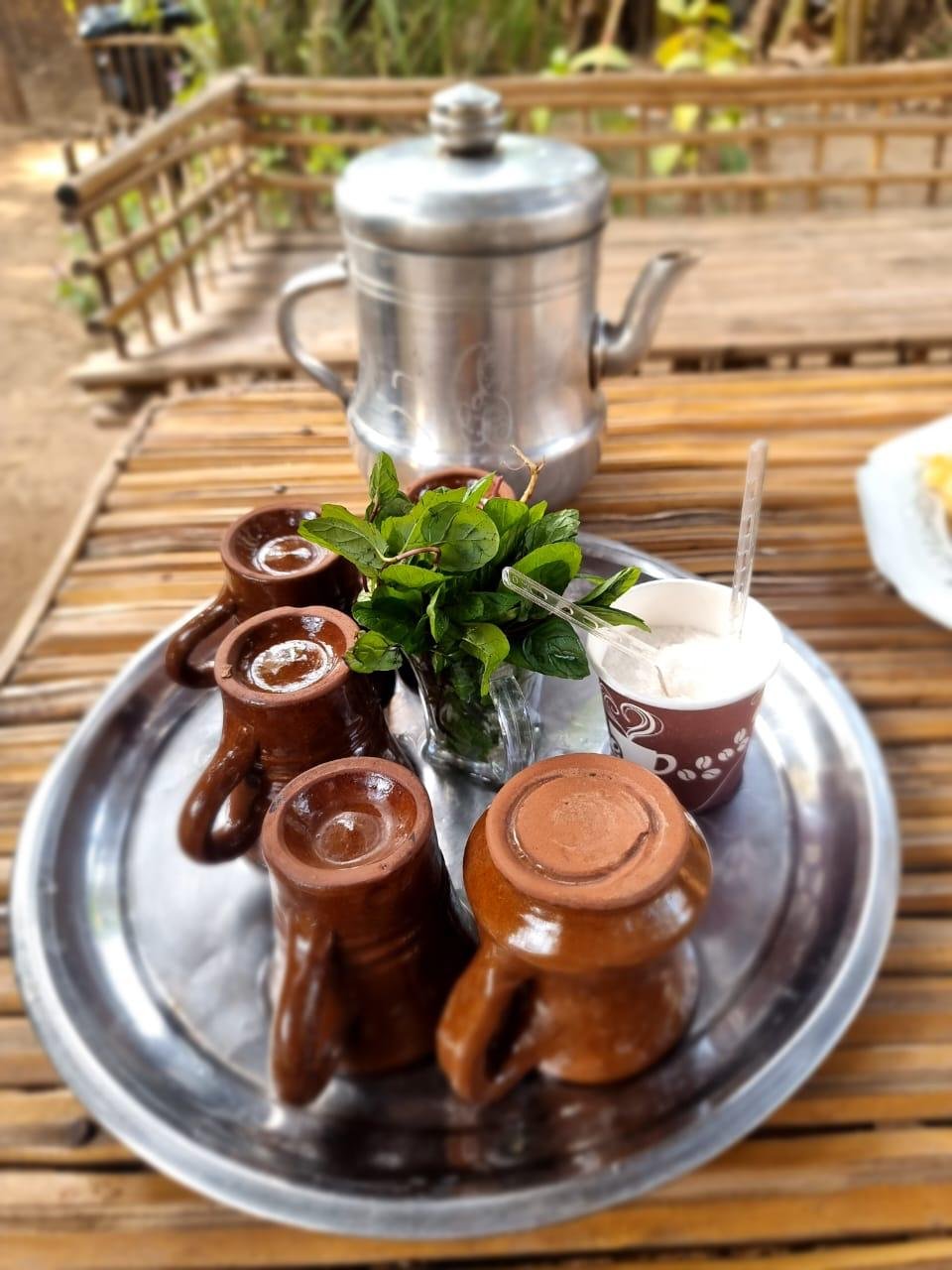
The aromatic herb is an important Egyptian crop used in teas, cosmetics and medicinal preparations, and dried chamomile flowers make an easy, lightweight gift for tea drinkers.
For an easy edible gift and herbal tradition, look for chamomile tea that is sealed, locally grown and where the producer identifies its origin. If sustainable agriculture matters to you, ask about cultivation practices too—particularly water use and fertilizer management.
Then save it for a day when Cairo feels very, very far away.
Where to find: Herb and spice shops, tea sellers and agricultural producers selling Egyptian-grown chamomile.
Look for: Fragrant, well-dried flowers with clear information about Egyptian origin, ideally commercially sealed if you're taking them internationally.
Beyond the Souvenir
The best thing you bring home from Egypt doesn't need a pyramid printed on it.
It might be the scent of jasmine that takes you back to a particular evening, chamomile brewed months later, a piece of alabaster whose maker you learned about or a textile woven by hands you can actually connect to a place.
When you know what something is, why it's special here and who is behind it, you're carrying home more than an object.
You're carrying part of the story. And that's the whole point of going beyond the souvenir shop.
Want to Discover the Places Behind the Gifts?
Egypt has thousands of years of history to explore—but the people growing, weaving, carving and creating there today are part of its story too.
Come experience the landscapes, food, traditions and people behind them on our journey through Egypt.
more egypt blogs

faqs
-
Egypt is known for souvenirs including hand-carved alabaster, authentic papyrus, locally made textiles, spices, Egyptian-grown botanical products such as jasmine and chamomile, and traditional crafts such as khayamiya. The most meaningful choices are products with a clear connection to Egyptian makers, materials or agricultural traditions.
-
Cairo is a good place to look for spices, contemporary Egyptian art, textiles, papyrus and traditional crafts. For the best chance of finding locally made pieces, look for established artisan workshops, independent makers and social enterprises rather than assuming everything in a tourist market was produced locally.
-
Look for visible plant fibers arranged in overlapping horizontal and vertical layers rather than a perfectly uniform sheet. Authentic papyrus should feel fibrous and flexible. Buying from a reputable papyrus workshop or established artisan seller is safer than relying on appearance alone.
-
Natural alabaster should have variation in its color, veining and translucency rather than looking perfectly identical from piece to piece. Ask whether the item was hand-carved, where the stone originated and who made it. A reputable seller should be comfortable answering.
-
Buying directly from artisans and workshops is ideal. Fair Trade Egypt is another useful source because it works with artisan groups across multiple Egyptian governorates and identifies the makers and communities behind its products.
-
Often, but customs and agricultural rules depend on your destination. Commercially packaged dried spices and herbal teas are generally easier to travel with than fresh plant products, but always check current regulations before packing them.
-
Avoid archaeological objects or anything presented as an authentic antiquity. Also be cautious with supposedly handmade, locally produced alabaster, papyrus or textiles when the seller can't explain where or how the item was made.
-
Don't treat archaeological artifacts as souvenirs. Authentic antiquities can be subject to Egyptian export laws and the laws of the country you're returning to; buy contemporary reproductions from reputable sellers instead.


Looking for meaningful Egypt gift ideas? Discover what to bring home, from authentic papyrus and alabaster to Egyptian textiles, spices, jasmine and chamomile.